

Key Features
WhatsApp Recovery
Send automated WhatsApp reminders to customers who leave their checkout incomplete.
Direct Checkout Link
Customers can return directly to their abandoned checkout using the recovery link.
Abandoned Checkout Tracking
View abandoned checkout records, customer details, products, amounts, and checkout status from RabbitPay.
Recover Lost Sales
Give high-intent customers another opportunity to complete the purchase instead of losing the sale.
View Abandoned Checkouts
RabbitPay provides a dedicated Abandoned Cart section where merchants can view checkout sessions that were started but not completed. You can see important information such as:- Checkout ID
- Customer phone number
- Customer email
- Product details
- Order amount
- Checkout status
- Date and time the checkout was created
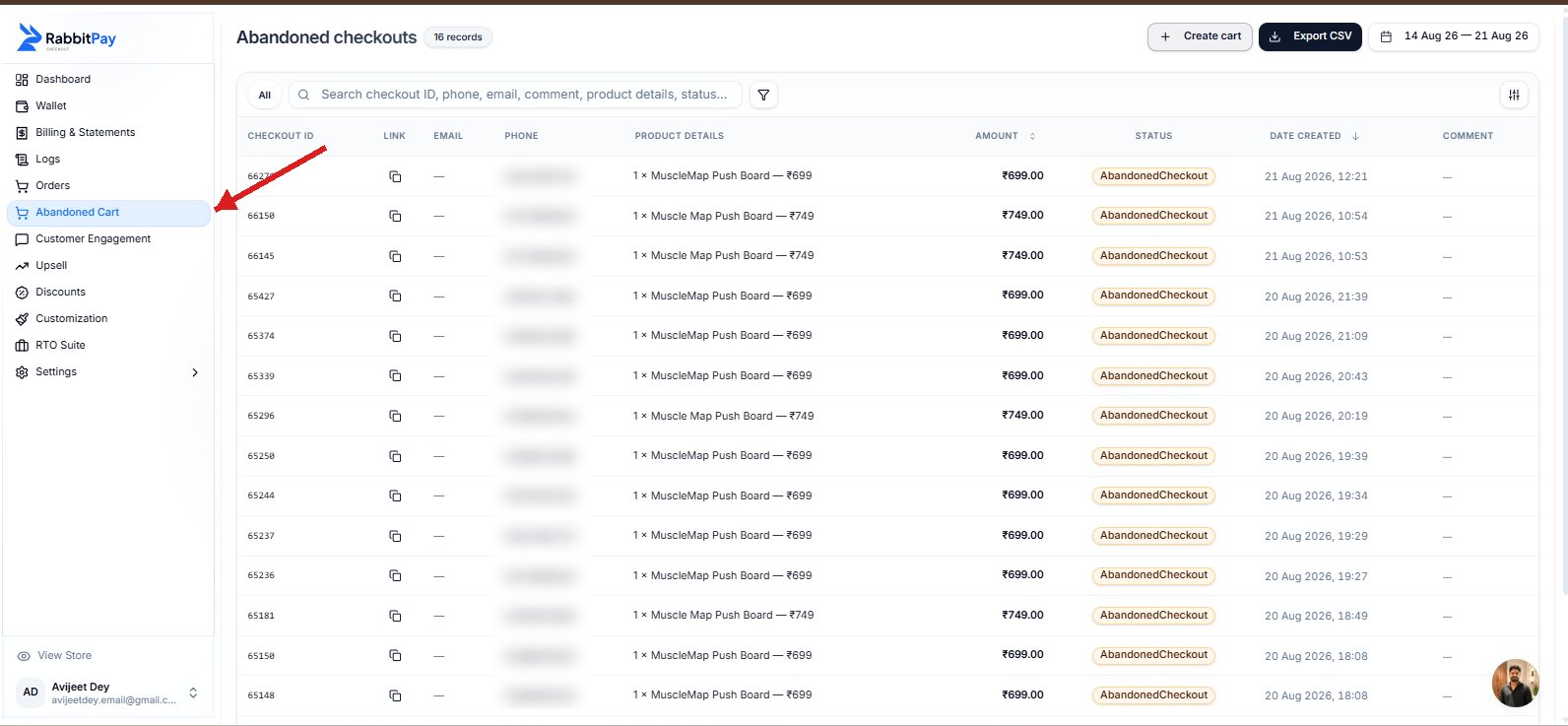
RabbitPay Abandoned Cart dashboard showing abandoned checkout records.
How Abandoned Cart Recovery Works
RabbitPay keeps the recovery process simple:1. Customer Starts Checkout
A customer adds a product to their cart and proceeds to checkout.2. Customer Leaves Without Completing the Order
If the customer does not complete the checkout, the checkout can be recorded as an Abandoned Checkout in RabbitPay.3. WhatsApp Reminder Is Sent
RabbitPay sends a WhatsApp reminder to the customer with details of the abandoned checkout. The message can include:- Customer greeting
- Product name
- Quantity
- Checkout information
- A Complete Checkout button
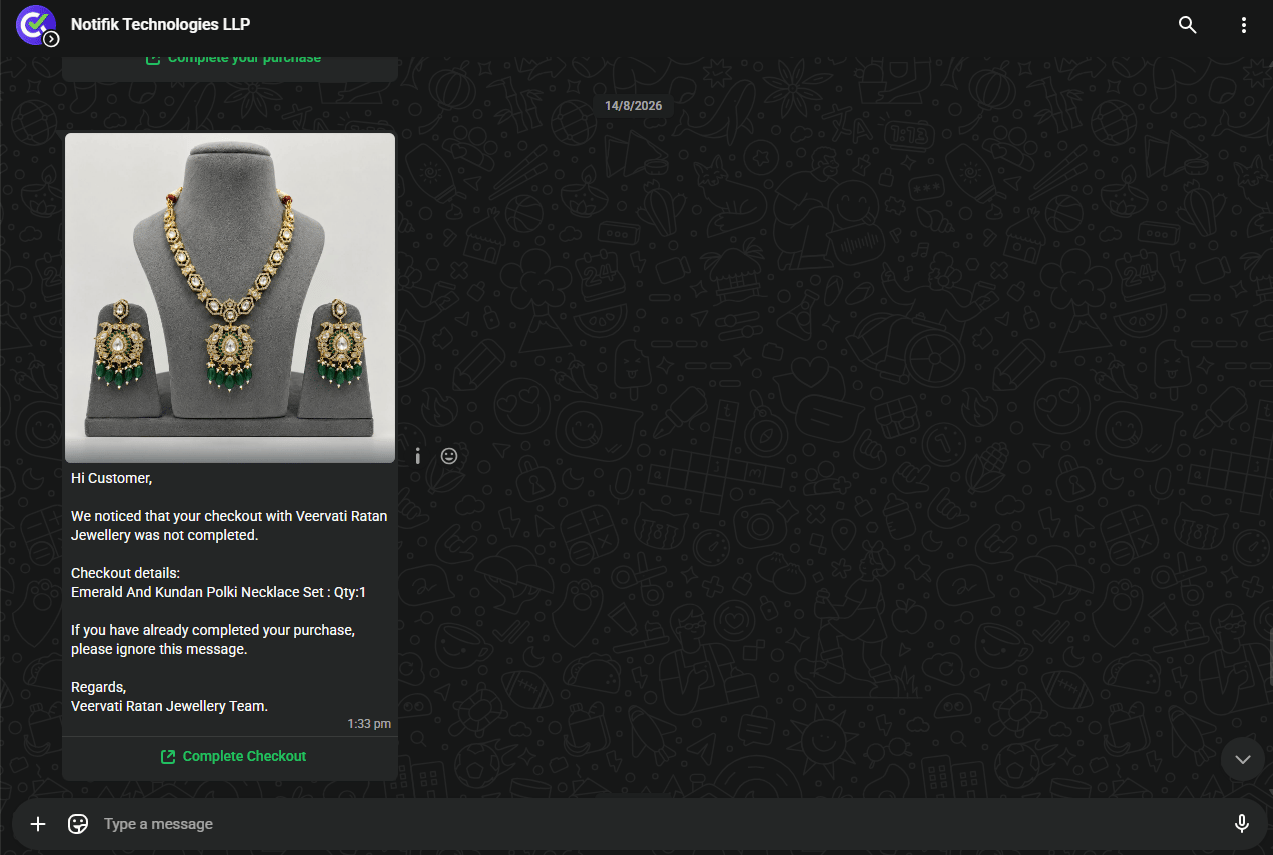
RabbitPay WhatsApp abandoned checkout reminder sent to a customer.
4. Customer Returns to Checkout
The customer can select Complete Checkout from the WhatsApp message. This takes the customer back to the checkout flow so they can continue their purchase without having to search for the product again.5. Customer Completes the Order
Once the customer completes the payment and places the order, the abandoned checkout is recovered.Why Recover Abandoned Checkouts?
Not every customer who leaves checkout has decided not to purchase. Customers may leave because they are distracted, need more time, face payment issues, or simply forget to complete the order. A recovery message gives these customers another opportunity to finish the purchase.Recover Potential Sales
Bring customers back to purchases they already started instead of losing the sale completely.
Reach Customers on WhatsApp
Send the recovery message directly through WhatsApp, making it easier for customers to notice and act on the reminder.
Reduce Checkout Drop-Off
Give customers a simple way to return to checkout after they leave without completing their order.
Easy Customer Journey
Customers can continue their purchase directly from the recovery message without searching for the product again.